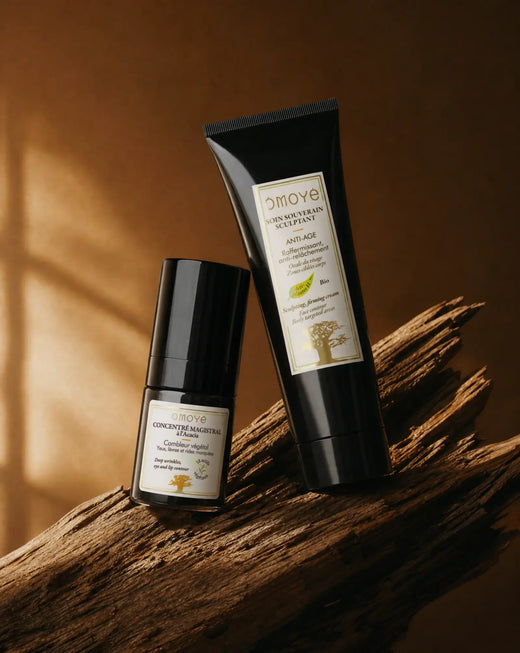
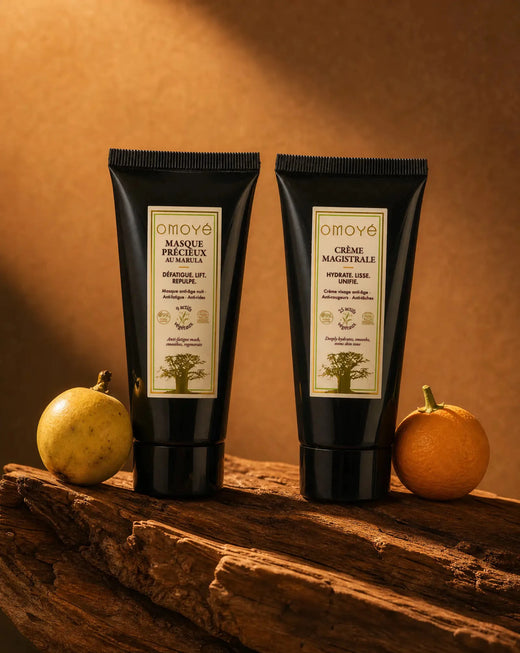
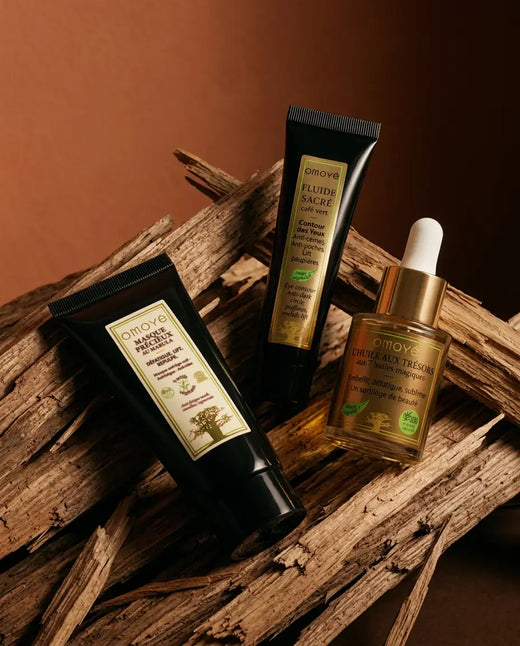

Les plus aimés
Pas sûre ?
Votre routine en deux minutes
Cinq questions sur votre peau, et nous vous disons quels soins lui conviennent. Gratuit, sans engagement.
Faire mon diagnosticOur rituals
Deux ou trois soins qui se répondent
Une association pensée pour un besoin précis, des soins choisis pour agir ensemble.
Tous les rituels Lequel pour moi ?
The benefits of baobab for the skin: seeds and fruit


The baobab (Adansonia digitata) provides two different cosmetic ingredients. The oil pressed from its seeds is a "three-part" oil—oleic, linoleic, and saturated—that nourishes the skin and slows down transepidermal water loss. In the only published clinical study, conducted on 20 women over 12 days, it reduced transepidermal water loss from 15.1 to 11.1 g/m²/h and increased hydration, with no irritation. The fruit pulp provides vitamin C (175 mg per 100 g of fresh pulp, more than three times that of an orange), soluble fiber, and antioxidant polyphenols. At OMOYÉ, seed oil is included in eight products, including the Crème Magistrale, and the pulp is featured in the Sérum Sacré.
In brief
- Baobab seed oil contains approximately one-third oleic acid (25–40%), one-third linoleic acid (24–36%), and one-quarter palmitic acid (18–30%).
- In a study of 20 women, 12 days of application reduced transepidermal water loss from 15.1 to 11.1 g/m²/h and increased skin hydration (pilot study on the ingredient).
- When applied pure to 107 volunteers in repeated-use tests, the oil caused neither irritation nor sensitization; the Cosmetic Ingredient Review expert panel classifies it as a safe vegetable oil in cosmetics.
- Fresh pulp contains an average of 175 mg of vitamin C per 100 g (64 trees, Kenya), which is 3.3 times more than an orange; in dry powder, values reach 150 to 500 mg.
- The oldest radiocarbon-dated baobab was approximately 2,450 years old: the African baobab is the most massive and long-lived flowering tree known.
What tree is the baobab?
Adansonia digitata, from the Malvaceae family, is the African baobab. Its genus is named after Michel Adanson, a French botanist who lived in Senegal for six years in the 18th century. The tree grows naturally throughout most of continental tropical Africa, from Senegal to Mozambique, and has been introduced to Madagascar, the Indian Ocean, and India. It is called monkey bread tree, calabash tree, or thousand-year tree; "tree of life" even appears in the title of a 2020 scientific paper, and "pharmacy tree" is a popular nickname that reflects the breadth of its traditional uses.
Its longevity is no legend: the Panke tree in Zimbabwe was radiocarbon-dated to approximately 2,450 years old, and the researchers who measured it describe the African baobab as the "most massive and long-lived flowering tree." Most individuals live for several centuries. Documented traditional uses involve the skin and hair: seed paste on wounds, bark gum for cleaning, pulp extract for hair washing, and potash-rich ashes to make soap. These recount the history of the ingredient; they do not substantiate any cosmetic promises.
At OMOYÉ, the baobab is our emblem tree: 1% of every sale funds the planting of baobabs in the Ferlo region of Senegal. We share stories of these plantings, supported by images from our journey, on our The Baobab page.
Seed oil or fruit pulp: what is the difference for the skin?
The baobab fruit is a capsule that dries on the tree. Inside, a white, powdery pulp surrounds black seeds. Both provide distinct ingredients with distinct INCI names:
- Adansonia Digitata Seed Oil, the oil pressed from the seeds: a golden-yellow, semi-fluid, non-drying fatty substance that nourishes and slows water loss. This is what is found in creams, balms, and oils.
- Adansonia Digitata Fruit Extract or Pulp Extract, the pulp extract: an aqueous fraction rich in vitamin C, soluble fiber, and polyphenols, classified as a "skin conditioning agent" in European nomenclature. This is what is found in serums and mists.
Baobab seeds: what benefits for the skin?
When searching for the benefits of baobab seeds, one is actually referring to the oil extracted from them. The seeds themselves are not applied to the skin: hard, black, and kidney-shaped, they are encased in the white pulp of the fruit. Once separated and pressed, they yield the golden-yellow oil described below, listed as Adansonia Digitata Seed Oil in ingredient lists.
What seed oil brings to the skin
- It nourishes: its "three-part" profile combines oleic acid, linoleic acid, and palmitic acid, making it rich without being heavy.
- It slows transepidermal water loss: this is the result measured in the study on 20 women, with skin hydration levels increasing after 12 days.
- It softens: authors describe it as an emollient, meaning it makes the skin feel softer and more supple to the touch.
- It is well tolerated: applied pure to over a hundred volunteers, it caused neither irritation nor sensitization.
These benefits make it a comforting oil for dry skin that feels tight during the first cold snaps or under heating. It pairs well with other vegetable oils: marula, which is lighter, or jojoba, which is similar to sebum.
How to recognize a true baobab oil
The baobab is trendy, and not all oils sold under this name are genuine. Three simple benchmarks:- Read the INCI list: it should contain Adansonia Digitata Seed Oil, not just fragrance or an unspecified "extract."
- Beware of very low prices: a 2022 study showed that some commercial "baobab oils" were actually soybean oil.
- Choose a certified product: at OMOYÉ, all formulas are Ecocert certified and made in France.
The most direct way to benefit from seed oil for the face remains the Huile aux Trésors: a dry oil that nourishes without a greasy feel, to be pressed onto the face at night, alone or before cream.
What does baobab seed oil contain?
Analyses published between 2004 and 2025 on oils from South Africa, Tanzania, Kenya, and several wild populations converge on a "three-part" profile:
| Fatty acid | Share of total fatty acids | Role for the skin |
|---|---|---|
| Oleic (omega-9) | 25 to 40% | Suppleness, comfort, penetration |
| Linoleic (omega-6) | 24 to 36% | Constituent of skin barrier lipids |
| Palmitic | 18 to 30% | Saturated fatty acid, protective film |
| Stearic | 2 to 8% | Consistency |
This balance distinguishes it from highly unsaturated oils like rosehip, and very oleic oils like olive or argan: it penetrates without leaving a greasy film while providing the linoleic acid the skin barrier needs. It also contains tocopherols (vitamin E) and phytosterols, though no reliable concentration has been published; therefore, we provide no specific figure.
One particularity makes it recognizable: like all Malvaceae, the baobab produces cyclopropenic fatty acids (sterculic and dihydrosterculic, approximately 1 to 1.5% each in crude oil). According to animal data, these are only of concern when the oil is ingested, and heating reduces them; regarding the skin, the Cosmetic Ingredient Review concludes that the oil is safe. Above all, they are the chemical fingerprint of true baobab oil: a 2022 study unmasked commercial "baobab oils" that did not contain them and corresponded to soybean oil.
What does the clinical study on baobab oil show?
Only one clinical study has been published on baobab seed oil applied to the skin. It comes from the Tshwane University of Technology in South Africa and involved 20 healthy adult women.
- Tolerance: two 23-hour patch tests on the forearm, read at 48 hours. Baobab oil was not different from water (p = 0.850), whereas an irritating surfactant used as a control was clearly different.
- Hydration: after 7 days without any skincare, 0.1 ml was applied twice daily to the calf for 12 days. Transepidermal water loss went from 15.14 to 11.07 g/m²/h (p = 0.048), and hydration measured by corneometry increased (p < 0.001). Liquid paraffin and petrolatum, used as comparators, performed better in terms of occlusion, which is expected for mineral-based fatty substances.
- Occlusivity: after 5 days on the forearm, hydration increased and water loss decreased, even 30 minutes after wiping.
Conclusion of the authors: baobab oil "possesses moisturizing, emollient, and occlusive properties when applied to the skin." Regarding safety, the American Cosmetic Ingredient Review cites two repeated-use tests on 106 and 107 volunteers, including 100% pure oil, with no irritation or sensitization, and concludes it is "safe under conditions of use." No cases of contact dermatitis from a baobab product have been published.
What is still missing: a study on the face, a measurement of elasticity, and comedogenicity data. We do not invent these.
What does baobab pulp contain?
The benefits of the baobab fruit come from its pulp. It is primarily a food, authorized in the European Union as a novel food ingredient since 2008 following a safety assessment. Its content is therefore well-documented:
- Vitamin C: 175 ± 62 mg per 100 g of fresh pulp on average, from 64 Kenyan trees. An orange contains 53 mg. The ratio is therefore about 3 in fresh form; it rises to 9 in dry powders from the richest trees (150 to 500 mg per 100 g). The "ten times more than an orange" claim often read is only true in the latter case, and the content varies greatly from one tree to another.
- Fiber: approximately half of the dry pulp, mostly soluble pectins.
- Minerals: approximately 1,000 mg of potassium and 375 mg of calcium per 100 g of fresh pulp.
- Polyphenols: procyanidin B2, epicatechin, tiliroside, rutin, quercetin; an antioxidant capacity measured in the laboratory equal to or greater than that of apple, kiwi, strawberry, and orange.
For the skin, the data remains in the laboratory: in 2026, a hydroalcoholic extract of pulp at 25 µg/mL reduced interleukin-6 secretion by stimulated human keratinocytes by 83%, without cellular toxicity. This is a research finding on cells, not a product promise, and no clinical study has yet tested the pulp applied to the skin. Its nutritional vitamin C is also not demonstrated as an "active" vitamin C for the complexion. We formulate it for what it is: a plant-based source of vitamin C, fiber, and polyphenols.
How to use baobab in your routine?
The oil should be applied to clean, slightly damp skin, preferably in the evening: two or three drops warmed between the hands, massaged in, alone or before cream. Like any oil rich in linoleic acid, it should be kept away from light and heat. It is suitable for dry, tight, or sensitized skin and leaves no greasy film.
The pulp is used in a serum, all over the face, before the cream that seals in its active ingredients: we explain this order in our article should you apply serum before or after cream?. A mist with fruit extract refreshes and hydrates throughout the day.
In which OMOYÉ products is baobab found?
We read INCI lists rather than slogans. Here is where the baobab is truly present in our formulas.
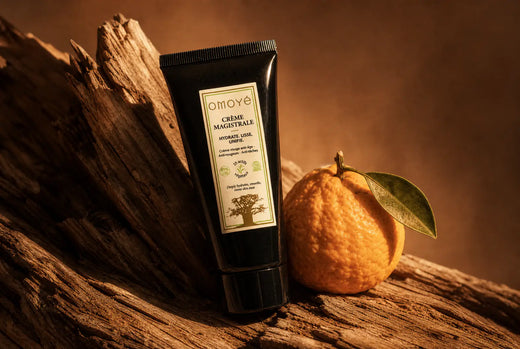
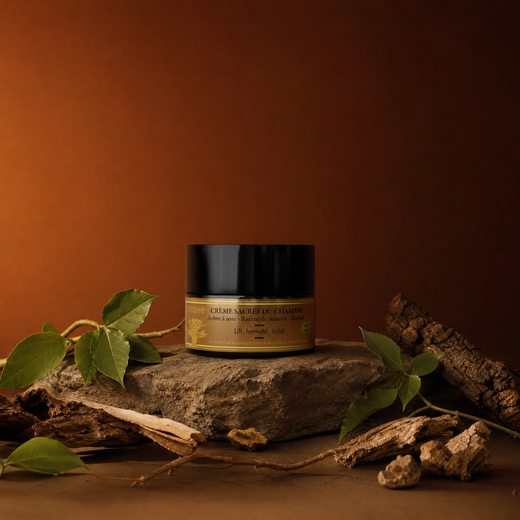
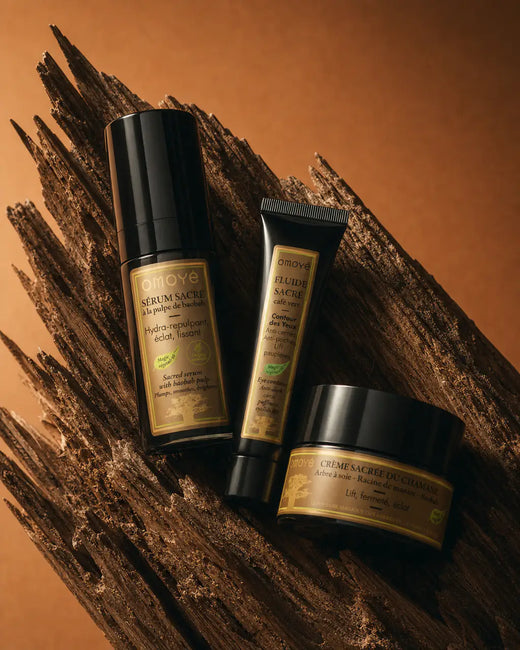
Seed oil (Adansonia Digitata Seed Oil): Huile aux Trésors, where it is the third ingredient; Crème Sacrée du Chamane; Huile Bienfaisante au Foraha; Le Baume Magique; Masque Précieux au Marula; Fluide Sacré au Café Vert; Lait Vitaminé au Buriti; and, since its formula update, the Crème Magistrale, alongside its totem tree, the bitter orange.
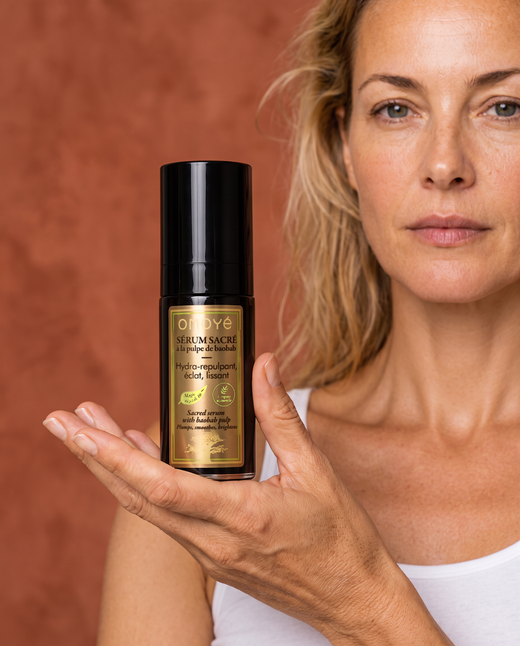
Pulp and fruit: Sérum Sacré à la pulpe de Baobab (Adansonia Digitata Pulp Extract, with squalane, pea extract, and a vitamin C ester); Brume Bienfaisante d'Afrique (Adansonia Digitata Fruit Extract).
The botanical plates of the baobab and baobab pulp are in the Shaman's Herbarium.
What the studies say
- Pilot study on 20 women: patch test not different from water (p = 0.850); after 12 days, transepidermal water loss from 15.14 to 11.07 g/m²/h (p = 0.048) and increased hydration (p < 0.001); moisturizing, emollient, and occlusive properties. Komane, Vermaak, Kamatou, Summers and Viljoen, Revista Brasileira de Farmacognosia, 2017
- Safety evaluation of 244 vegetable oils, including baobab seed oil: repeated-use tests on 106 and 107 volunteers with no irritation or sensitization, conclusion "safe under conditions of use." Burnett et al., International Journal of Toxicology, 2017 (Cosmetic Ingredient Review)
- Crude oil from Tanzania: sterculic acid 0.97 to 1.45% and dihydrosterculic 0.80 to 1.29%, reduced below 0.4% by heating to 250 °C. Msalilwa et al., Journal of Lipids, 2020
- Authentication of baobab oil by NMR: commercial oils without cyclopropenic acids corresponded to soybean oil. Augustyn, Viljoen and Schripsema, Journal of Food Composition and Analysis, 2022
- Variation in fatty acid profile between wild populations: monounsaturated 32 to 38%, polyunsaturated 22 to 26%, saturated 17 to 22%. Muthai et al., South African Journal of Botany, 2019
- Fresh pulp from 64 Kenyan trees: vitamin C 175 ± 62 mg/100 g, potassium 1,006 mg/100 g, calcium 375 mg/100 g. Stadlmayr et al., Journal of Food Composition and Analysis, 2020
- Pulp: fiber mostly soluble (pectins), antioxidant capacity equal or greater than apple, kiwi, strawberry, and orange. Chiacchio et al., Molecules, 2022
- Pulp extracts from Mali: procyanidins, epicatechin, tiliroside; total phenols 120 to 161 mg of gallic acid equivalent per gram of extract. Braca et al., Molecules, 2018
- In vitro, a pulp extract at 25 µg/mL reduced IL-6 secretion by stimulated human keratinocytes by 83%, without cytotoxicity. Kang et al., Pharmaceuticals, 2026
- The African baobab is the "most massive and long-lived flowering tree"; the Panke tree, in Zimbabwe, dated to approximately 2,450 years old. Patrut et al., Nature Plants, 2018
OMOYÉ baobab products
- Sérum Sacré à la pulpe de Baobab: pulp in a serum, in the morning before cream, for radiance and bounce (€57 for 30 ml).
- Huile aux Trésors: seed oil as the third ingredient, with flax, macadamia, and marula, for the face (€40 for 15 ml).
- Crème Magistrale: baobab oil with shea and argan, centered around bitter orange blossom water; it hydrates and nourishes, leaving skin supple (€54 for 50 ml).
- Le Baume Magique: the SOS face and body treatment, where baobab oil joins 24 other botanical active ingredients (€34 for 50 ml).
- Brume Bienfaisante d'Afrique: fruit extract in a mist, to hydrate and refresh throughout the day (€29 for 100 ml).
Oil or pulp, serum or cream: the OMOYÉ skin diagnostic will tell you where to start.
Sources
- Komane BM, Vermaak I, Kamatou GPP, Summers B, Viljoen AM, “Beauty in Baobab: a pilot study of the safety and efficacy of Adansonia digitata seed oil”, Revista Brasileira de Farmacognosia, 2017
- Cosmetic Ingredient Review, “Final report of the plant-derived fatty acid oils group”, 2011 (PDF)
- Burnett CL et al., “Safety assessment of plant-derived fatty acid oils”, International Journal of Toxicology, 2017
- Msalilwa UL et al., “Physicochemical properties, fatty acid composition, and the effect of heating on the reduction of cyclopropenoid fatty acids on baobab crude seed oil”, Journal of Lipids, 2020
- Muthai UK et al., “Quantitative variation of fatty acid composition in seed oil from baobab wild populations in sub-Sahara Africa”, South African Journal of Botany, 2019
- Augustyn W, Viljoen A, Schripsema J, “Metabolomics of baobab oil: analysis and authentication of cyclopropenoid fatty acids using similarity and differential NMR spectroscopy”, Journal of Food Composition and Analysis, 2022
- Kamatou GPP, Vermaak I, Viljoen AM, “An updated review of Adansonia digitata: a commercially important African tree”, South African Journal of Botany, 2011
- Stadlmayr B et al., “Nutritional composition of baobab fruit pulp sampled at different geographical locations in Kenya”, Journal of Food Composition and Analysis, 2020
- Muthai KU et al., “Nutritional variation in baobab fruit pulp and seeds based on Africa geographical regions”, Food Science and Nutrition, 2017
- Silva ML et al., “Adansonia digitata L. (baobab) bioactive compounds, biological activities, and the potential effect on glycemia: a narrative review”, Nutrients, 2023
- Chiacchio MF et al., “Baobab-fruit shell and fibrous filaments are sources of antioxidant dietary fibers”, Molecules, 2022
- Braca A et al., “Phytochemical profile, antioxidant and antidiabetic activities of Adansonia digitata L. (baobab) from Mali”, Molecules, 2018
- Kang SH et al., “Anti-inflammatory activities of baobab fruit extracts in TNF-α/IFN-γ-stimulated HaCaT keratinocytes”, Pharmaceuticals, 2026
- Besco E et al., “The use of photochemiluminescence for the measurement of the integral antioxidant capacity of baobab products”, Food Chemistry, 2007
- Martini M et al., “Anaphylaxis to baobab fruit: the paradox of natural healthy food”, European Annals of Allergy and Clinical Immunology, 2019
- Patrut A et al., “The demise of the largest and oldest African baobabs”, Nature Plants, 2018
- Islam-Faridi N, Sakhanokho HF, Nelson CD, “New chromosome number and cyto-molecular characterization of the African baobab (Adansonia digitata L.), the tree of life”, Scientific Reports, 2020
- Commission Decision 2008/575/EC authorizing the placing on the market of baobab dried fruit pulp as a novel food ingredient (EUR-Lex)
- COSMILE Europe, “Adansonia Digitata Fruit Extract” entry
Questions fréquentes
L'huile de baobab est-elle comédogène ?
Aucune donnée de comédogénicité n'a été publiée. Son profil équilibré entre acide oléique, acide linoléique et acides gras saturés en fait une huile qui pénètre bien sans film gras, et la seule étude clinique n'a relevé aucune irritation. Sur une peau mixte, testez-la le soir, deux gouttes, pendant une semaine.
Vaut-il mieux l'huile de baobab pure ou dans une crème ?
Les deux se justifient. Pure, elle nourrit et freine la perte en eau, comme l'a mesuré l'étude sur 20 femmes. Dans une crème ou un baume, elle apporte ses acides gras à une formule qui contient aussi de l'eau et des humectants, ce qui hydrate plus complètement. Chez OMOYÉ, l'Huile aux Trésors l'utilise en troisième ingrédient et le Baume Magique dans une émulsion.
La pulpe de baobab apporte-t-elle de la vitamine C à la peau ?
La pulpe est riche en vitamine C, mais ces teneurs sont mesurées pour l'alimentation. Aucune étude clinique n'a encore montré ce que cette vitamine C fait une fois appliquée sur la peau. Le Sérum Sacré associe donc l'extrait de pulpe à un ester de vitamine C stabilisé (palmitate d'ascorbyle) et à du squalane.
Peut-on être allergique au baobab ?
Aucun cas de dermatite de contact à un produit au baobab n'a été publié, et l'huile n'a provoqué ni irritation ni sensibilisation sur plus de 200 volontaires au total. Un cas d'allergie alimentaire au fruit a été rapporté en 2019 : si vous êtes allergique au fruit du baobab, signalez-le nous avant d'utiliser un soin à la pulpe.
Comment reconnaître une vraie huile de baobab ?
Par ses acides gras cyclopropéniques, présents dans toutes les huiles de Malvacées. Une étude de 2022 a montré que des huiles vendues comme baobab et dépourvues de ces acides étaient en réalité de l'huile de soja. Une huile jaune d'or, semi-fluide, à l'odeur légère, est aussi le signe d'un pressage doux.
Publié le 4 juin 2024 · Mis à jour le 9 octobre 2026 · Par Sophie Lièvre


Comments
Fabienne —
Le baobab est magique et les soins Omoyé que j’ai découverts sont de loin les meilleurs – ai vu l’effet sur ma peau ( contrairement aux grandes marques que j’utilisais) – je peux plus pas m’en passer-
Claude —
Des soins que j’utilise depuis des années sur ma peau, un vrai bonheur e et surtout des résultats…!