

Macadamia oil nourishes, protects, and softens dry, fragile, and mature skin. Its benefits, the skin types it suits, and how to incorporate it into your autumn ritual, from face to body.


Les plus aimés
Pas sûre ?
Votre routine en deux minutes
Cinq questions sur votre peau, et nous vous disons quels soins lui conviennent. Gratuit, sans engagement.
Faire mon diagnosticOur rituals
Deux ou trois soins qui se répondent
Une association pensée pour un besoin précis, des soins choisis pour agir ensemble.
Tous les rituels Lequel pour moi ?


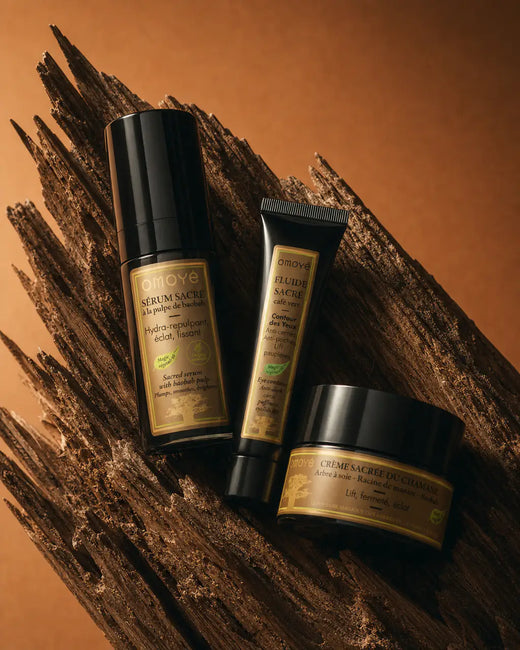
ANTI-AGING RADIANCE: Plumpslifts & conceals dark circles
Sacred Anti-Aging Radiance Ritual
En 2 minutes, obtenez un rituel personnalisé selon votre type de peau, votre âge et vos préoccupations.
Elles et ils l'ont adopté
Avis collectés & contrôlés par la Société des Avis Garantis

Un concept de formulation unique, issu d'un savoir ancestral et de la science végétale, pour des soins aux actifs hautement concentrés qui agissent en synergie et en complémentarité pour une efficacité optimale sur la peau.
 Innocuité Totale
certifié ECOCERT
Innocuité Totale
certifié ECOCERT
 Issus de notre Herbier
pour leurs propriétés uniques
Issus de notre Herbier
pour leurs propriétés uniques
Convient à toutes les carnations de peau, femmes et hommes.
En savoir plus
C'est dans cet herbier géant constitué de plantes, et extraits végétaux, tous connus depuis des millénaires pour leurs vertus magiques sur la peau, que nous sélectionnons les actifs naturels présents dans nos formules.
L'Herbier du ChamanVos questions
Oui. Nos soins sont certifiés bio par ECOCERT et développés en France, dans nos laboratoires, à partir d'actifs végétaux venus d'Afrique.
Le diagnostic de peau vous le dit en deux minutes : cinq questions, et vous recevez la routine adaptée à votre profil. C'est gratuit et sans engagement. Faire mon diagnostic
La peau paraît plus lumineuse et plus douce dès les premières applications. Sur les rides, la fermeté et les taches, les résultats se voient en général après 3 à 6 semaines d'utilisation régulière.
La livraison est offerte dès 59 € d'achat à domicile, et dès 20 € en point relais, en France métropolitaine. Vous avez 14 jours pour changer d'avis sur un soin non ouvert.
Macadamia oil nourishes, protects, and softens dry, fragile, and mature skin. Its benefits, the skin types it suits, and how to incorporate it into your autumn ritual, from face to body.

Borage oil protects the skin barrier, soothes sensitive skin, and softens dry and mature skin. Its benefits, the skin types it is suitable for, and how to incorporate it into your autumn ritual.

Evening primrose oil nourishes, soothes, and restores suppleness and elasticity to mature or dehydrated skin. Its benefits, the skin types it is suitable for, and how to incorporate it into your autumn ritual.

Argan oil nourishes, protects, and restores suppleness and elasticity to the skin. Its benefits, the skin types it is suitable for, and how to incorporate it into your autumn ritual.