
Les plus aimés
Pas sûre ?
Votre routine en deux minutes
Cinq questions sur votre peau, et nous vous disons quels soins lui conviennent. Gratuit, sans engagement.
Faire mon diagnosticOur rituals
Deux ou trois soins qui se répondent
Une association pensée pour un besoin précis, des soins choisis pour agir ensemble.
Tous les rituels Lequel pour moi ?
Natural anti-aging face cream with plants: which one to choose?


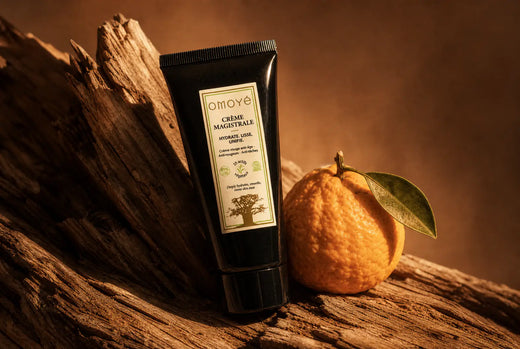
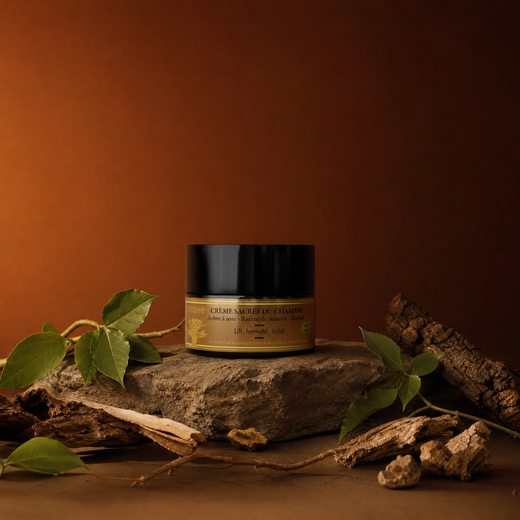
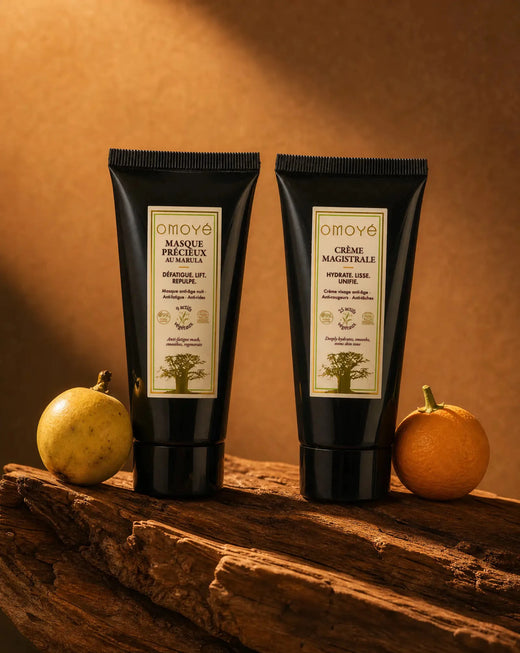
To choose a natural, plant-based anti-aging cream, look at four things, in this order: a label issued by a third-party organization (COSMOS, via Ecocert or Cosmébio) rather than a self-declared "natural origin" percentage; the first five ingredients in the INCI list, which make up the bulk of the formula; a texture suited to your skin (rich if dry, light if oily, tested on a small area if sensitive); and realistic promises: hydration, suppleness, appearance of wrinkles, radiance. At OMOYÉ, the Crème Magistrale is designed for dry and sensitive skin, while the Crème Sacrée du Chamane is for normal to combination skin seeking firmness and radiance.
In short
- A COSMOS ORGANIC product contains at least 95% organic content among its plant-based ingredients that can be, and 20% organic content of the total product; water is never counted as organic.
- The first 3 or 4 ingredients in an INCI list generally represent more than 80% of the product (DGCCRF).
- 59% of French people report having sensitive skin (66% of women): tolerance should be verified before focusing on performance claims.
- 80% of visible signs of facial aging are attributed to the sun in a study of 298 women: an anti-aging cream should be supplemented with sun protection in the morning.
- In Europe, the alleged effects of a cosmetic product "cannot go beyond the demonstrated effects" (Regulation 655/2013).
What does an organic label like COSMOS really guarantee?
The COSMOS standard (version 4.2, in effect since September 1, 2025) is the common set of specifications for Ecocert, Cosmébio, BDIH, ICEA, and the Soil Association. More than 31,100 products in 80 countries bear one of its two signatures, issued after an annual audit by one of the 12 accredited certifying bodies.
- COSMOS ORGANIC: at least 95% of physically processed plant-based ingredients (oils, butters, floral waters, extracts) are from organic farming, and at least 20% of the total product is organic (10% for rinse-off products). Water and minerals never count as organic, which explains why a cream, composed largely of water, rarely displays more than 20 to 40% organic content of the total, even when all its plant ingredients are organic.
- COSMOS NATURAL: same rules for composition, processes, and packaging, without an organic threshold.
- In both cases: no more than 2% petrochemical fractions in the finished product, a positive list of ingredients (silicones, PEGs, parabens, and synthetic fragrances are excluded by default), no nanomaterials, no GMOs, no irradiation, no animal testing, and packaging free of PVC and polystyrene.
Not to be confused with the ISO 16128 standard: this is a voluntary calculation method, without auditing, that counts water as natural and which, in its own words, does not address "claims, labeling, or safety." A "98% natural origin" calculated according to ISO 16128 is a brand declaration; a COSMOS logo is a third-party certification.
How to read the INCI list of an anti-aging cream?
The ingredient list follows three rules established by European Regulation 1223/2009: ingredients are listed in descending order of quantity up to 1%, then in any order below 1%; plants are named in Latin (Butyrospermum Parkii for shea, Adansonia Digitata for baobab), and molecules in English; fragrances appear under the word "Parfum," followed by the allergens they contain, if present at 0.001% or more in a leave-on product.
Two practical benchmarks:
- According to the DGCCRF, the first 3 or 4 ingredients generally make up more than 80% of the product. For an anti-aging cream, look for a plant-based butter or oil in the first five, associated with a humectant like glycerin or aloe vera.
- Fragrance allergens at the end of the list (Linalool, Limonene, Geraniol, Citral, Citronellol) are natural constituents of essential oils and floral waters. Their presence is not a formula defect, but transparency information: the list of substances to be declared is increasing from 24 to approximately 80 for all products placed on the market since July 31, 2026.
Which texture for which skin type?
Recommendations from dermatologists (American Academy of Dermatology, Société Française de Dermatologie) can be summarized in four points.
| Your skin | Preferred texture | What to check |
|---|---|---|
| Dry, tight | Cream or balm, richer than a milk or lotion | A butter or oil in the first five ingredients, applied on slightly damp skin |
| Combination to oily | Light, fluid, or mousse texture that does not clog pores | Continue to hydrate: oily skin deprived of hydration produces more sebum |
| Mature (from perimenopause) | Cream, applied daily | Broad-spectrum SPF 30 sun protection in the morning, as UVA rays represent 95% of received UV and penetrate to the dermis |
| Sensitive, reactive | Simple formula, limited or absent fragrance | A test on a small area for 48 hours; "sensitive skin can react to natural active ingredients," reminds the Société Française de Dermatologie |
Not sure of your skin type? The OMOYÉ skin diagnostic tells you in three minutes.
Which plant-based active ingredients have evidence, and what kind?
Not all plants are equal, and neither are all levels of evidence. Here is what published studies show, distinguishing what has been demonstrated in humans from what remains at the laboratory stage.
| Active ingredient family | What the studies show | Level of evidence |
|---|---|---|
| Oils rich in linoleic acid (sunflower, safflower, grape seed, evening primrose, borage) | In 19 adults over 4 weeks, sunflower oil preserved the skin barrier and improved hydration, whereas olive oil, rich in oleic acid, degraded it. A review of 27 clinical studies confirms the benefit of oils rich in linoleic acid for the barrier. | Clinical, human |
| Shea butter | Benchmark emollient, among the three plant species most used in anti-aging products in 2011 and 2018; published clinical trials remain few. | Established use, limited trials |
| Natural Vitamin E (tocopherol) | Antioxidant and barrier stabilizer; present at 0.5 to 1% in most anti-aging creams; few controlled trials. | Experimental, limited human |
| Polyphenols (green tea, flavonoids) | In 40 women over 8 weeks, no visible clinical difference between green tea cream and placebo, despite histological improvement of the elastic tissue. | Clinical, modest result |
| Carotenoids (beta-carotene, lycopene, astaxanthin) | The best evidence is oral (meta-analysis of 8 trials: improved hydration and elasticity, non-significant wrinkle depth). | Clinical oral; topical poorly studied |
| Algae extracts (Fucus vesiculosus) | At 0.3% over 60 days in 20 volunteers, improvement in the appearance of wrinkles in 45% of them. | Clinical, small sample size |
| Plant-based peptides, bitter orange flower water (neroli) | Identified antioxidant compounds (rutin, quercetin, naringin for bitter orange); no published human trials on the hydrolat itself. | In vitro |
An honest reading: the strongest evidence concerns the skin barrier and hydration, which, for mature skin, is already the most important part. A plant-based antioxidant complements sun protection, it does not replace it.
What can an anti-aging cream promise, and what can it not?
In Europe, a cosmetic claim must respect six common criteria (Regulation 655/2013): compliance, truthfulness, evidential support, honesty, fairness, and informed decision-making. The central rule is simple: alleged effects "cannot go beyond demonstrated effects," and evidence must be based on the finished product, not just one ingredient.
Concretely, a cream can promise what it measures: hydration, suppleness, comfort, appearance of wrinkles, radiance, perceived firmness. It cannot claim to treat or prevent skin disease (it would become a drug), nor can it claim an absence already required by law. Since the clarifications from the DGCCRF (fact sheet of October 1, 2025), mentions such as "paraben-free" or "phenoxyethanol-free" are considered disparaging toward authorized substances, "allergen-free" is considered unverifiable, and "fragrance-free" is prohibited as soon as an ingredient provides a scent, including essential oils.
This is why we prefer to tell you what our creams contain, along with the results of our usage tests, rather than what they do not contain.
Crème Magistrale or Crème Sacrée du Chamane: which one is for you?
OMOYÉ formulates two face creams, certified organic by Ecocert and made in France. They target different skin needs.
| Crème Magistrale | Crème Sacrée du Chamane | |
|---|---|---|
| For whom | Dry to very dry, sensitive skin with redness or spots | Normal to combination skin, including skin prone to shine, seeking firmness and radiance |
| Texture | Rich and creamy, non-sticky | Light mousse, mattifying finish, sensation of freshness |
| First ingredients (INCI) | Bitter orange flower water (Citrus Aurantium Amara Flower Water), water, glycerin, coco-caprylate, cetearyl alcohol, grape seed oil, shea butter | Water, propanediol, coconut oil, cellulose, glycerin, silk tree bark extract (Albizia Julibrissin Bark Extract), cetearyl alcohol |
| Active ingredients to know | 23 plant active ingredients: borage, evening primrose, safflower, and linseed oils rich in linoleic acid, avocado, macadamia, jojoba, a peptide (Dipalmitoyl Hydroxyproline), centella, Damascus rose, aloe vera | Silk tree, baobab seed oil (Adansonia Digitata Seed Oil), squalane, argan, borage, evening primrose, cassava starch, centella, aloe vera; film-forming agents provide an immediate tightening effect |
| Fragrance | Natural origin fragrance; listed allergens: Linalool, Limonene, Citronellol, Geraniol, Citral, Benzyl Benzoate, Benzyl Salicylate, Farnesol | Natural origin fragrance; listed allergens: Linalool, Limonene, Cinnamal, Citral, Hydroxycitronellal |
| Measured results | 4.8/5 from 415 verified reviews (Société des Avis Garantis) | 4.7/5 from 340 verified reviews; usage test on 22 women for 30 days (self-assessment): 100% report a visible anti-aging benefit, 93% smoother skin, 93% a more radiant complexion |
| Price | €54 for 50 ml | €60 for 50 ml |
In case of doubt: skin that feels tight or red, Crème Magistrale; skin that is shiny or lacks bounce, Crème Sacrée du Chamane. Very dry skin that prefers the mousse texture can slide two drops of Huile aux Trésors underneath. For deep wrinkles, the Concentré Magistral is applied locally, after the cream.
What the studies say
- In 19 adults over 4 weeks, sunflower oil preserved the skin barrier and improved hydration, while olive oil degraded it: "not all natural oils are equal." Danby et al., Pediatric Dermatology, 2013
- A review of 27 clinical studies on 17 plant oils concludes that oils rich in linoleic acid and saturated fatty acids have positive effects on the barrier, whereas oils very rich in oleic acid can damage it. Poljšak et Kočevar Glavač, Frontiers in Pharmacology, 2022
- In 298 women aged 30 to 78, UV exposure appears responsible for 80% of the visible signs of facial aging. Flament et al., Clinical, Cosmetic and Investigational Dermatology, 2013
- Among 5,000 French people surveyed, 59% report sensitive or very sensitive skin (66% of women, 52% of men); the risk is six times higher when the skin is dry. Misery et al., Journal of the European Academy of Dermatology and Venereology, 2018
- In 40 women, 8 weeks of green tea cream (10%) combined with oral intake did not produce a visible clinical difference compared to placebo, despite histological improvement. Chiu et al., Dermatologic Surgery, 2005
- Meta-analysis of 8 controlled trials: oral carotenoids improve skin hydration and elasticity, without significant effect on wrinkle depth. Zhou et al., Nutrients, 2021
- Most over-the-counter anti-aging creams contain 0.5 to 1% Vitamin E; controlled clinical trials are still lacking. Keen et Hassan, Indian Dermatology Online Journal, 2016
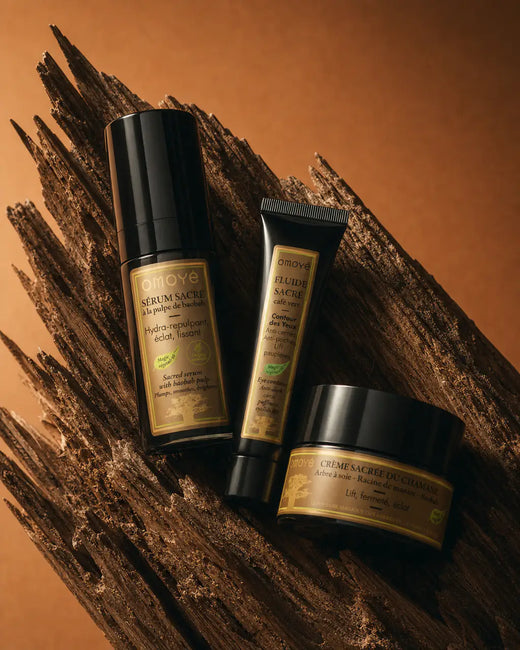
OMOYÉ skincare, and what to complement it with
- Crème Magistrale: the rich cream for dry and sensitive skin, morning and evening on the face and neck.
- Crème Sacrée du Chamane: the mattifying mousse for normal to combination skin, for firmness and radiance.
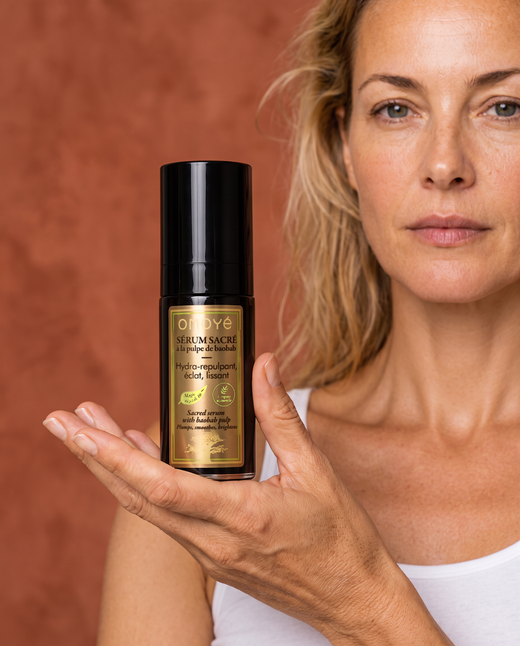
- Sérum Sacré à la pulpe de Baobab: apply before cream in the morning for radiance and bounce.
- Concentré Magistral: as a final step, a drop on deep wrinkles.
Still hesitating? The OMOYÉ skin diagnostic points you toward the appropriate cream in three minutes.
Sources
- COSMOS-standard, Cosmetics Organic and Natural Standard, version 4.2, applicable September 1, 2025 (PDF)
- Cosmébio, "Le label": COSMOS ORGANIC and COSMOS NATURAL requirements
- ISO 16128-2:2017, criteria for natural and organic ingredients and products
- Regulation (EC) No 1223/2009 on cosmetic products, consolidated text (EUR-Lex)
- Regulation (EU) No 655/2013 laying down common criteria for cosmetic claims (EUR-Lex)
- Regulation (EU) 2023/1545 on fragrance allergen labeling (EUR-Lex)
- DGCCRF, "Free-from claims in cosmetic products: clarifications from regulatory authorities," October 1, 2025
- DGCCRF, "Labeling of your cosmetic products: how to decipher it," December 4, 2025
- American Academy of Dermatology, "How to pick the right moisturizer for your skin"
- American Academy of Dermatology, "Skin care in your 40s and 50s"
- Dermato-Info, French Society of Dermatology, "How to use cosmetics correctly"
- Dermato-Info, French Society of Dermatology, "What the environment concretely causes to the skin"
- Danby SG et al., "Effect of olive and sunflower seed oil on the adult skin barrier", Pediatric Dermatology, 2013
- Poljšak N, Kočevar Glavač N, "Vegetable butters and oils as therapeutically and cosmetically active ingredients for dermal use: a review of clinical studies", Frontiers in Pharmacology, 2022
- Flament F et al., "Effect of the sun on visible clinical signs of aging in Caucasian skin", Clinical, Cosmetic and Investigational Dermatology, 2013
- Misery L et al., "Prevalence and management of sensitive skin in France", JEADV, 2018
- Chiu AE et al., "Double-blinded, placebo-controlled trial of green tea extracts in the clinical and histologic appearance of photoaging skin", Dermatologic Surgery, 2005
- Zhou X et al., "Carotenoids and skin: a systematic review and meta-analysis", Nutrients, 2021
- Keen MA, Hassan I, "Vitamin E in dermatology", Indian Dermatology Online Journal, 2016
- Murphy MJ, Dow AA, "Clinical studies of the safety and efficacy of macroalgae extracts in cosmeceuticals", Journal of Clinical and Aesthetic Dermatology, 2021
- Karimi E et al., "Phenolic compounds characterization and biological activities of Citrus aurantium bloom", Molecules, 2012
Questions fréquentes
Une crème naturelle est-elle forcément mieux tolérée ?
Non. La Société Française de Dermatologie rappelle qu'une peau sensible peut réagir aux actifs naturels, huiles essentielles en tête. Le bon réflexe est le même pour toutes les crèmes : lire les allergènes en fin de liste INCI et tester le produit 48 heures sur une petite zone, derrière l'oreille ou au pli du coude.
Quelle différence entre une crème « bio » et une crème « naturelle » ?
Le label COSMOS ORGANIC exige au moins 95 % de bio parmi les ingrédients végétaux qui peuvent l'être et 20 % de bio sur le produit total. COSMOS NATURAL applique les mêmes interdictions (pétrochimie limitée à 2 %, pas de nano ni d'OGM) sans seuil de bio. Un pourcentage « d'origine naturelle » sans logo de certificateur est une auto-déclaration de la marque.
À partir de quel âge utiliser une crème anti-âge ?
L'état de la peau compte plus que l'âge : sécheresse, tiraillements, perte de rebond, teint terne. Les dermatologues recommandent une crème plutôt qu'une lotion à partir de la périménopause, et une protection solaire tous les jours à tout âge, puisque le soleil est le premier facteur du vieillissement visible.
Faut-il un sérum en plus de la crème ?
Ce n'est pas obligatoire, mais un sérum apporte une concentration d'actifs que la crème vient ensuite protéger. Il s'applique avant la crème, du plus fluide au plus riche. Nous l'expliquons dans notre article « faut-il appliquer le sérum avant ou après la crème ? ».
Les crèmes OMOYÉ contiennent-elles un filtre solaire ?
Non. Aucune de nos crèmes ne contient de filtre UV. Le matin, appliquez votre crème puis une protection solaire SPF 30 large spectre par-dessus, comme le recommandent l'American Academy of Dermatology et la Société Française de Dermatologie.
Publié le 14 juillet 2024 · Mis à jour le 9 septembre 2026 · Par Elien Geneste


Comments
Anna J.p —
J’adore la crème magistrale, je l’ai découverte grâce a une amie qui me l’a recommandée. J’ai une peau très sensible et réactive, j’avais peur que la grande quantité de plantes me fasse des réactions et pas du tout. Elle hydrate vraiment en profondeur pour ma peau qui en a vraiment besoin.
Anna
Philippe —
Ma mère utilise cette crème et moi aussi depuis qu’elle me l’a fait découvrir. J’aime la texture, l’odeur et l’effet mat. Elle convient très bien à ma peau d’homme trentenaire.
Joseline —
J’adore la crème sacrée, son éffet matifiant et raffermissant immédiat est un pur bonheur. Je ne changerai pas